
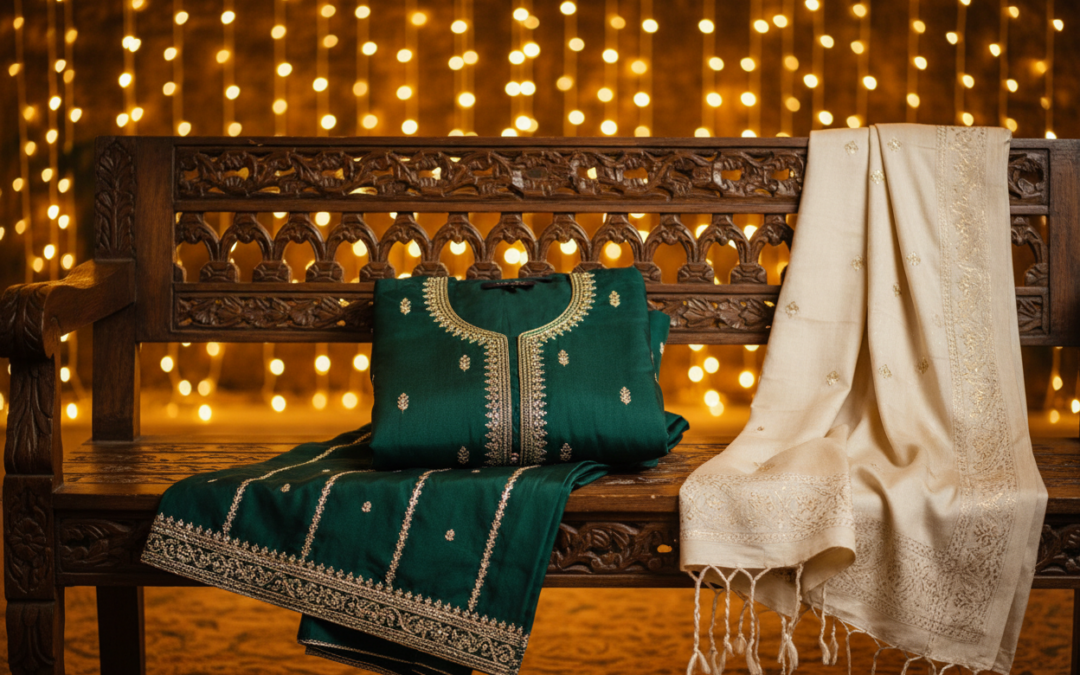
Quick answer: As a guest, wear an embroidered 3-piece suit in a warm winter fabric such as linen or cotton silk. Stay clear of the bride’s colours, save your heaviest embroidery for the barat, and plan a shawl for outdoor marquees, where evenings turn cold fast.
A winter wedding guest outfit in Pakistan comes down to two things: a fabric that keeps you warm and embroidery that meets a formal dress code. Get both right and you are dressed for every function, from the dholki to the walima.
The venue is usually the hard part. Marquees and lawns turn cold after sunset, and dinner often runs late. Chiffon and organza look formal but give you no warmth, while everyday winter cloth looks too casual on a wedding stage.
Where Winter Shaadi Outfits Go Wrong
Most winter guest outfit mistakes come from six problems.
- Summer fabric at an outdoor venue: marquees cool quickly after sunset, and chiffon or organza gives you no warmth through a late dinner.
- One outfit for a heated hall and a cold lawn: the nikah may sit in a heated banquet hall while dinner moves outdoors, so a very heavy suit feels stuffy inside and a light one leaves you cold outside.
- A shawl that fights the suit: a wrap picked at the last minute often clashes with the colour and embroidery of the shirt.
- Dark colours that look flat: deep winter shades turn dull under marquee lighting when the cloth has no sheen and the embroidery is thin.
- Thick cloth that hangs stiffly: heavy everyday fabric keeps you warm but loses the clean drape a formal 3-piece needs.
- Cloth that arrives thinner than its photos: a loose weave bought online will not carry dense wedding embroidery.
Barat and Walima: Dress for the Main Functions
The barat and walima are the most formal events of the wedding, and the whole extended family is there. Your outfit needs real embroidery, a rich colour and a clean, tailored cut.
For the barat, go heavier. Choose a shirt with dense thread work on the front and neckline, and a dupatta that carries embroidery too. This is the night for your most worked piece.
For the walima, step it down a little. The mood is calmer, so let the drape of the fabric and the finish of the dupatta do the work. A soft sheen and lighter embroidery look polished without competing with the couple.
Both functions run late, so plan your layer with the suit, not after it. Pick a shawl or heavy wrap in a shade taken from the shirt’s embroidery, so it reads as part of the outfit.
Dholki and Mehndi
Dholki: keep it simple and comfortable, since most dholkis are crowded home events with floor seating.
Mehndi: go brighter, with lighter embroidery and a loose silhouette you can dance in.
Choosing Your Winter Fabric
Your base fabric decides how warm you stay and how the outfit looks at 11 pm. Velvet and raw silk are common choices for peak winter formals. Linen and cotton silk give you warmth and a formal finish with less bulk.
For a full rundown of seasonal options, read our guide to winter fabrics for women in Pakistan.
| Factor | Linen | Cotton silk |
|---|---|---|
| Warmth | Winter weave with more body than lawn; warm through cold evenings | Comfortably warm; add a shawl for outdoor venues |
| Sheen | Matte, so bright thread work stands out | Soft sheen that catches event lighting |
| Drape | Medium body that holds a straight cut | Smooth and fluid |
| Care | Gentle wash; follow the care label | Dry clean embroidered pieces; follow the care label |
| Best event | Daytime functions, walima, outdoor marquees | Evening barat and walima receptions |
Linen
Linen has a matte surface that makes bright thread work stand out. A winter weave has more body than summer lawn, so it holds embroidery without puckering at the seams.
The Goudos 3-piece embroidered linen suit is winter linen with an embroidered shirt and dupatta, plus plain dyed sleeves and trouser. It is made for winter weddings and comes in Black, Dark Brown, Dark Green, Maroon, Pink and Yellow.
Weighing linen against everyday winter cloth? Our khaddar vs linen guide shows how the two feel and drape.
Cotton Silk
Cotton silk sits between warmth and formal shine. Its soft sheen catches event lighting, which suits evening receptions.
The 3-piece cotton silk embroidered suit from the 4-Season Collection carries heavy embroidery on the shirt and dupatta. It is made for weddings, festive events and family functions.
Layering and Tailoring for Cold Venues
Winter fabric falls differently from summer lawn, so brief your tailor clearly. Ask for a straight cut kameez. It suits heavy front embroidery and keeps the line clean.
Ask for a little extra room in the chest and sleeves too. Many guests wear a thin thermal under the suit at outdoor functions, and a tight kameez makes it bunch and show.
For the trouser, a straight cut works best with winter cloth. Wide palazzos let the cold wind in.
Finish with a shawl in a solid shade from the embroidery. Wear it over the dupatta through dinner on the lawn, then take it off for photos or inside a heated hall.
Colour and Embroidery Level
The first rule is simple: stay clear of the bride’s colours. Skip bright red at the barat, and ask the family about the walima colour before you choose a pastel.
Winter suits deep shades: bottle green, maroon, dark brown and black. They look rich under marquee lights when the cloth has some sheen or the embroidery has contrast.
Embroidery is what makes a suit formal. Dense thread work on the shirt front, paired with an embroidered dupatta, meets the barat and walima dress code.
Zardozi is metallic thread work done by hand on an adda, a wooden embroidery frame. It has a raised relief that machine embroidery copies in pattern but not in depth.
Check the Cloth Before You Pay
The biggest risk with online formals is cloth that arrives thinner or duller than its photos. A loose weave or flat embroidery will not pass at a barat, and you only find out when the parcel opens.
Zoom in before you order. Goudos product pages carry 1611 x 2000 photos with a magnifying lens, so you can hover over the cloth and check the weave, the jaali (open, net-like work) and the embroidery up close.
Then pay at the door. Goudos offers cash on delivery anywhere in Pakistan, so you pay only when the parcel reaches you, with no advance and no card details.
Four Questions to Settle Before You Order
Answer these in order, and the fabric, colour and embroidery level follow.
- Which function? Wear your heaviest embroidery to the barat and a softer finish to the walima.
- Indoor or outdoor? Outdoor marquees call for a warm base fabric and a planned shawl; a heated hall lets you shed the layer.
- Day or evening? Matte linen suits daylight; cotton silk’s sheen suits evening lights.
- What is the bride wearing? Pick a deep shade well away from her colours.
Settled all four? Browse the unstitched collection, check the cloth thread by thread, and give your tailor enough time to finish the suit before the dholki.
Frequently Asked Questions (FAQs)
What should a guest wear to a winter wedding in Pakistan?
Wear a formal embroidered 3-piece: shirt, trouser and dupatta, in a warm fabric such as linen or cotton silk. Choose deep shades, avoid bridal red, and bring a shawl for outdoor functions.
Which fabric suits a winter wedding?
Linen and cotton silk both work. Linen’s matte winter weave is warm and makes embroidery stand out in daylight, while cotton silk’s soft sheen suits evening receptions. Velvet and raw silk are heavier options for peak winter.
What is the dress code for outdoor winter wedding events?
Formal, with a layer. Wear an embroidered suit in a warm fabric, add a shawl that matches the embroidery, and leave room in the kameez for a thin thermal underneath.
Where can I buy winter wedding guest suits online in Pakistan?
Goudos sells unstitched embroidered 3-piece suits in linen and cotton silk through its unstitched collection. You can zoom into each photo to check the weave before ordering, and pay cash on delivery anywhere in Pakistan.