
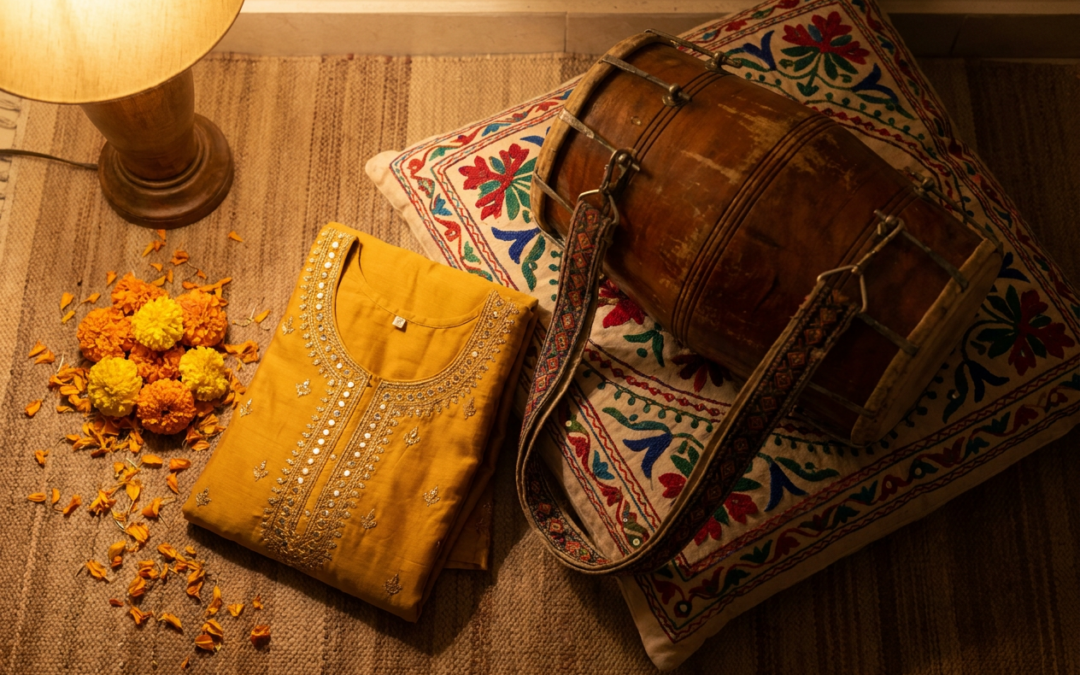
Quick answer: A dholki is relaxed and often seated on the floor, so choose a comfortable embroidered 3-piece in a soft fabric, festive colours, and a dupatta that stays manageable while you clap and dance.
Wear a soft, lightly embroidered 3-piece in a rich festive colour, cut loose enough to sit cross-legged for hours. A dholki is a small evening of drumming, songs and dancing, usually at home with close family, so dress festive but light.
The trouble starts once you sit down. Stiff cloth creases on the carpet, tight seams pull at the knees, heavy embellishment scratches when you clap, and a slippery dupatta keeps sliding off your shoulder. Each section below deals with one of these.
How a Dholki Differs from a Mehndi
A dholki is an intimate musical evening, usually held at home days or weeks before the main wedding events. Guests sit on the floor around the drum, sing folk songs and practise dance steps. You do not need formal wear for it.
A mehndi is a bigger, more formal function, often with a stage, choreographed dances and a much longer guest list. Mehndi outfits carry heavier embellishment and brighter colour. For a dholki, go softer: lighter thread work and an outfit built for movement, not the stage.
The lighting is ordinary home lighting, not stage lights, and guests sit right next to you. Choose cloth that looks rich up close.
Why Formal Wedding Wear Goes Wrong at a Dholki
Most wedding guest outfits are made for a banquet hall, a stage and a chair. A dholki has none of these, and formal wear lets you down in five ways:
- Stiff fabrics such as organza puff up and crease the moment you sit, so you look crumpled in the photos taken later in the evening.
- Fitted shirts and narrow trousers pull at the seams when you sit cross-legged or lean forward to the drum.
- Heavy zardozi (raised metal-thread embroidery) and thick beadwork snag on floor cushions and scratch your arms when you clap.
- A slippery dupatta slides off every few minutes, just when your hands are busy.
- Cloth bought online can arrive thinner or duller than its photos, and you only find out days before the function.
The aim is a traditional, dressed-up look in a piece that moves with you. The sections below cover each choice, starting with the cut.
Put Comfort First for Floor Seating
Floor seating decides what you wear. You will sit cross-legged on a carpet or floor cushions for hours, shift your weight and lean forward to clap or play the drum. Tight trousers and stiff shirts make that uncomfortable fast.
Buy unstitched so your tailor controls the cut. Ask for a relaxed shirt, a little extra length and a wider shalwar or trouser. A loose kurta with a classic shalwar works well.
Before you settle on a cut, picture yourself sitting on a rug in it. The fabric should fall around your legs without riding up or bunching at the knees, and the seams should not pull when you bend.
Choose a Fabric That Stays Neat After Hours of Sitting
The fabric decides how the outfit behaves through the night. Soft, breathable cloth drapes well and stays comfortable. Stiff organza puffs up awkwardly when you sit. For a wider look at cold-weather options, read our guide to winter fabrics for women in Pakistan.
Linen and cotton silk are the two fabrics to weigh up for a winter dholki. Here is how they compare once you sit down.
| Fabric | Comfort When Seated | Warmth | Sheen | Care |
|---|---|---|---|---|
| Cotton Silk | Soft drape, creases less than linen | Light to medium | Soft, festive sheen | Gentle care; follow the product care note |
| Linen | Breathable, but creases easily | Warmer, good for cold evenings | Matte finish | Needs careful ironing |
Cotton silk is the easier choice for a dholki. It has a soft sheen that picks up indoor light, and it creases less than linen when you sit cross-legged. The 4-Season cotton silk Collection 02 suit carries heavy embroidery on the shirt and dupatta and is made for weddings, festive events and family functions. It comes in Black, Dark Green, Mustard, Pink, Purple and Yellow.
Linen is warmer and has a matte finish. It suits a cold evening, but it creases more, so expect some wrinkles after a long night on the floor.
Pick Festive Colours That Work Indoors
Dholkis happen indoors under warm home lighting, so rich, saturated colours look best. Mustard, dark green and yellow are traditional favourites. Deep maroon, purple or dark brown feel celebratory without looking bridal.
For a deeper shade, the cotton silk suit with embroidery across the neckline and front panel comes in Blue, Dark Brown, Light Brown, Maroon and Yellow.
Skip stark white and very pale pastels. They wash out in dim evening light and show every chai spill.
When you buy unstitched suits online, judge colour from honest photos. Goudos shoots its pieces in daylight on plain white paper with no colour grading, which is why the photos look less saturated than most.
Get the Embroidery Level Right
Aim for enough embellishment to look dressed for a wedding event, and no more. Heavy bridal zardozi or thick beadwork weighs you down and scratches when you raise your arms to clap. Save it for the barat and walima.
Thread work is the better fit. Embroidery on the neckline and front panel gives the shirt enough detail to stand out. Even dense thread embroidery works if the shirt stays soft and bends with you.
Check before you order. On a Goudos product page, hover over the photos with the magnifying lens and make sure the stitches sit flat and the neckline does not look rigid.
Keep Your Dupatta in Place While You Sing and Dance
A slipping dupatta is a constant distraction at a musical evening. Your hands are busy with the drum, the clapping and the chai tray. You should not have to fix your shoulders every five minutes.
An embroidered dupatta has a little more weight than plain, slippery silk, so it sits better on the shoulder. Pleat it on one shoulder and pin it at the collarbone, or drape it firmly across the neck. Both leave your hands free.
Run These Four Checks Before You Order a Dholki Suit
Hold each piece you are considering against these four questions:
- Seating: Will the fabric crease the moment you sit on the carpet?
- Movement: Is the embroidery soft enough to let you clap and raise your arms?
- Cut: Can your tailor give you a relaxed fit with room at the knees?
- Colour: Is the shade rich enough for evening photos under home lighting?
A piece that passes all four is the one to order. One that fails any of them belongs at the mehndi or the walima instead.
Ready to choose? Browse the Goudos unstitched collection of cotton silk and linen 3-piece suits, and zoom into the weave, embroidery and colour before you order.
Frequently Asked Questions (FAQs)
What should I wear to a dholki?
Wear a comfortable embroidered 3-piece in a soft fabric such as cotton silk, in a festive colour. Choose a relaxed cut you can sit cross-legged in, and a dupatta you can pin in place.
What is the dress code for a dholki as a guest?
Festive but relaxed. A dholki is a small gathering at home, so skip heavy bridal wear and stage-style embellishment. Light embroidery and rich colour are enough for a wedding guest.
What is the best colour to wear to a dholki?
Yellow, mustard and green are classic choices. Deep maroon and purple also look festive under warm indoor lighting. Rich colours photograph better than pale pastels at an evening event at home.
Which fabric is most comfortable for floor seating?
Of the two winter options, cotton silk is the more comfortable. It drapes over your legs and creases less than linen. Pair it with a relaxed cut so the seams do not pull when you sit cross-legged.
Can I wear a heavily embroidered suit to a dholki?
Avoid stiff zardozi and thick beadwork, which make floor seating uncomfortable and restrict your arms. Thread embroidery is fine, even when it is dense, as long as the shirt stays soft.
Where can I buy a dholki outfit online in Pakistan?
Goudos sells unstitched 3-piece suits in cotton silk and linen online, ready for your own tailor to cut with room for floor seating. Each product page has original photos and a magnifying lens, so you can check the weave and embroidery before you order.