
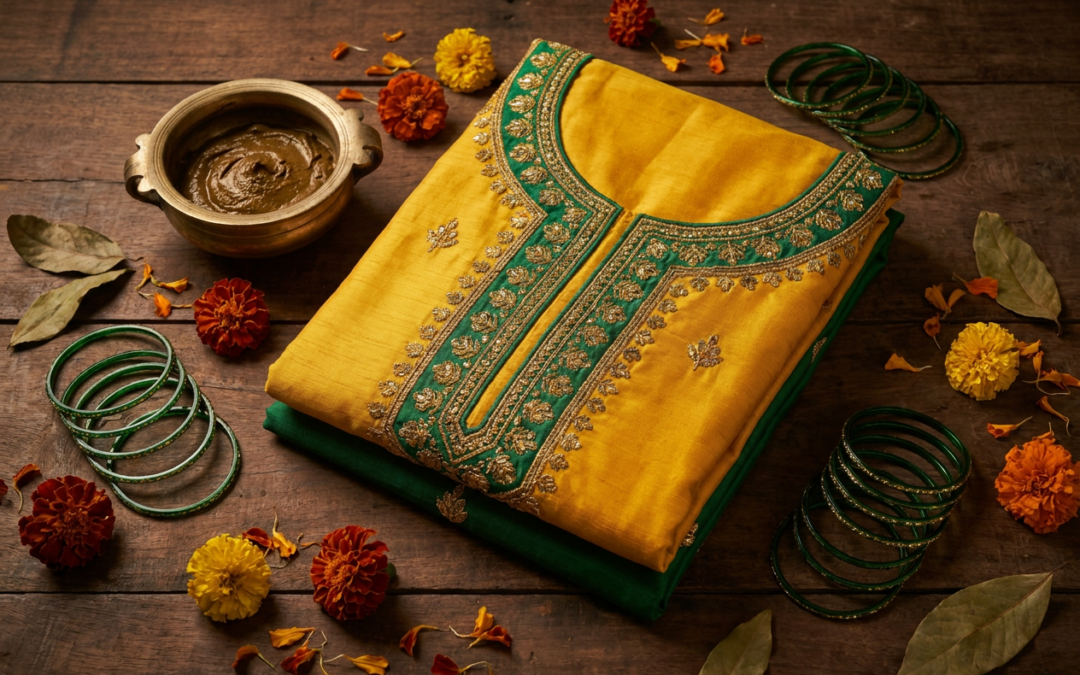
Quick answer: Mehndi guests usually wear bright, cheerful colours such as yellow, mustard, green or pink, in an embroidered 3-piece that stays comfortable for dancing, with a warm layer for an outdoor evening. Choose linen or cotton silk for warmth, and keep your embroidery a clear step below the bride’s.
For a winter mehndi, wear a bright embroidered 3-piece in linen or cotton silk and carry a shawl for the cold. December and January weddings in Pakistan mean open marquees and cold night air, so the suit has to be festive enough for the function and warm enough to last the whole evening.
The usual mistake is buying unstitched cloth online that turns out too thin for winter, or so heavily embroidered that dancing feels like work. Get the fabric and the embroidery right first, and the rest of the look follows.
What Goes Wrong at a Winter Mehndi
Most winter mehndi outfits fail for one of four reasons.
- The venue is colder than you planned for: Most mehndis happen in open marquees or farmhouses. A thin lawn or chiffon suit leaves you exposed to the evening wind, and a western coat on top spoils the look.
- The outfit is too heavy to dance in: A mehndi is an active night. Heavily embellished velvet or thick khaddar adds weight, which makes it harder to move, sit on the floor or join the dances.
- The embroidery competes with the bridal party: The bride and her close friends usually wear heavy zardozi (raised metallic thread work) or gota. Your outfit should look festive but stay a clear tier below theirs.
- The colour at the door is not the colour on screen: Mustard, yellow and pink are easy to over-brighten in edited photos, so a shade that looked vivid online can arrive flat. Goudos shoots its pieces in daylight on plain white paper with no colour grading, which is why its photos look less saturated than most.
That makes the cloth more important than the cut. Check the weave, the thread work and the colour closely before you buy.
Choosing Mehndi Colours
Mehndi nights have a set palette. Yellow, mustard, green and pink are the standard guest colours, and bright is the rule.
Winter lets you go a shade deeper. Dark green or deep mustard keeps the festive feel and suits a cold evening. Save pastels and muted tones for the walima.
Contrast works well too. A yellow shirt with a deep pink embroidered dupatta stands out in photos. A single-colour 3-piece looks just as smart when the front carries dense thread work.
Picking a Winter Fabric for the Mehndi
The base cloth decides how your outfit performs on the night. It has to handle the heat of dancing and still keep out the cold. Our guide to winter fabrics for women in Pakistan covers the full range. For a mehndi, linen and cotton silk are the two to compare.
| Fabric | Warmth | Sheen | Comfort for dancing | Care |
|---|---|---|---|---|
| Linen | High, a winter weave for open lawns | Matte | Very good, breathable | Gentle cold hand wash, dry in shade |
| Cotton silk | Moderate, a four-season weight | Subtle, festive sheen | Excellent, light on the body | Gentle hand wash or dry clean to protect the embroidery |
Choose cotton silk for a festive sheen. The 3-piece cotton silk embroidered suit is 4-Season cotton silk with heavy front embroidery and an embroidered dupatta. It looks formal under marquee lights without the weight of velvet. It comes in Black, Dark Green, Mustard, Pink, Purple and Yellow.
Choose linen for colder cities and open lawns. The 3-piece embroidered linen suit is premium winter linen with an embroidered shirt and dupatta, plus plain dyed sleeves and trouser. The plain sleeves balance the embroidery on the shirt. It comes in Black, Dark Brown, Dark Green, Maroon, Pink and Yellow, so you stay on theme in a warm winter weave.
Getting the Embroidery Level Right
Dress formally, but never outshine the bride. Dense embroidery on the neckline and front panel looks formal enough for wedding photos. Plain sleeves and a plain trouser keep the outfit a tier below bridal wear.
Look at the texture of the thread, not just the pattern. Machine embroidery copies the pattern of zardozi but not its raised relief, which comes from karigars (skilled embroiderers) working coil by coil on the adda, a wooden embroidery frame. For a guest, clean and well-defined thread work is enough. Zoom in on the product photos before you order so the embroidery does not arrive looking flat.
Tailoring an Unstitched Suit for Winter
Unstitched cloth gives you full control over the fit. Ask your tailor for a little extra room in the chest and shoulders so a thermal layer fits underneath. A straight-cut shirt hides that layer best.
A longer shirt pairs well with a straight trouser or a classic shalwar. If your fabric is on the lighter side, ask for a good lining. It adds one more barrier against the wind.
Styling the Dupatta for Dancing
You will walk around, sit on the floor and probably dance, so your dupatta needs to stay put. Organza and silk look formal but tend to slip off the shoulder. An embroidered linen or cotton silk dupatta drapes better and holds when pinned.
Drape it across one shoulder or pleat it neatly so your arms stay free. Ask your tailor to add kiran lace or tassels to the borders. The extra weight helps the dupatta hang well and swing when you move.
Staying Warm Outdoors
The cold bites hardest after dinner. If you choose cotton silk, plan your layers. Wear a thermal under your kameez; the straight cut leaves room for it.
Add a velvet shawl in a contrasting colour such as deep maroon or emerald. Wrap it over your dupatta while you stand outside, then leave it on your chair when the dancing starts. You stay warm, and your embroidery stays on show.
Ask Where the Mehndi Is, Then Order Your Suit
One question settles the order: is the function on an open lawn or under a heated marquee? Ask the host before you buy.
For an open lawn or a farmhouse on a cold night, order the embroidered linen in Yellow, Dark Green or Pink. For a heated marquee, or if you want more sheen in the photos, order the cotton silk in Mustard, Yellow or Pink and pack a thermal and a shawl. Order early enough to give your tailor time for the lining and a fitting.
Browse the Goudos unstitched collection and use the magnifying lens on the original product photos to check the weave and embroidery before you order. Pay cash on delivery when the suit reaches your door.
Frequently Asked Questions (FAQs)
What are the best colours for a mehndi guest to wear?
Yellow, mustard, green and pink are the classic mehndi guest colours. In winter, deeper shades such as dark green, deep mustard or maroon keep the festive feel and suit a cold evening.
Is unstitched linen warm enough for a winter mehndi guest outfit?
Yes. Winter linen is a warm weave for an open lawn or farmhouse, and an embroidered shirt and dupatta make it formal enough for the function. Carry a shawl if the night turns very cold.
How do I stay warm at an outdoor mehndi without a coat?
Choose a warm base fabric such as linen, or wear a thermal under a cotton silk kameez. Carry a velvet shawl to wrap over your outfit outside. It looks far more formal than a western coat.
Can a guest wear heavy embroidery to a mehndi?
Wear festive embroidery, but do not outshine the bride. A 3-piece with heavy front embroidery and plain sleeves and trouser gives you a formal look that stays a tier below bridal wear.
How is a mehndi outfit different from a walima outfit?
A mehndi outfit is bright and easy to dance in, usually yellow, mustard, green or pink. A walima outfit leans toward pastels and muted tones with a more formal finish.
Where can I buy an unstitched mehndi suit online in Pakistan?
Goudos sells embroidered linen and cotton silk 3-piece suits in its unstitched collection, in mehndi colours such as yellow, mustard, dark green and pink. You can check the weave on the original product photos before you order and pay cash on delivery anywhere in Pakistan.