
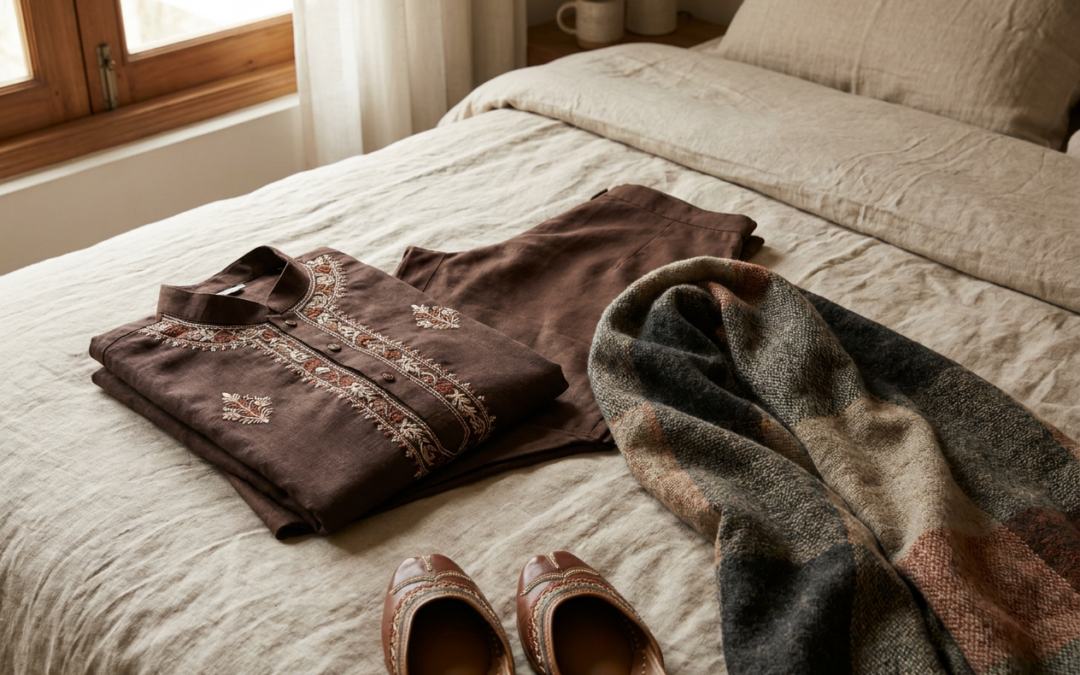
Quick answer: To style a women’s shalwar kameez in winter, start with a warm base fabric such as winter linen. Layer a heavy shawl, a long cardigan or a structured coat over the kameez. Wear thin, fitted thermals under the kameez and shalwar. Finish with closed shoes such as velvet khussas or pumps.
A winter shalwar kameez works in layers. A warm base cloth, hidden thermals and one good outer piece keep you warm without hiding the cut or the embroidery of your suit.
Pakistani winters turn cold fast, from foggy mornings in Lahore to snow in the northern areas. A light lawn suit leaves you open to the wind. This guide covers what to wear over, under and with your kameez, from the shawl to the shoes.
Where Winter Layers Go Wrong
Heavy layers often spoil the fit of a traditional outfit. A thick sweater breaks the straight cut of a tailored kameez, adds bulk at the waist and covers the embroidery on the front panel.
Thermals bring their own problems. A standard thermal shirt peeks out at the neckline, and long thermal sleeves slide past the cuffs. Thick woollen leggings make straight trousers feel tight.
Heated rooms cause a third problem. You walk from a cold street into a room with the heater on, and a heavy layer you cannot take off turns hot within minutes. Dry, heated air also gives synthetic dupattas static, so they cling to wool cardigans and shawls.
The fix is simple: keep the heat close to your skin and leave the outer layer free to drape and easy to remove. A heavier base cloth needs less underneath. A lighter one depends on hidden thermals and a warm coat or shawl.
Start With the Right Winter Fabric
Your base fabric decides how many layers you need. For a full guide to choosing the cloth itself, read our post on winter fabrics for women in Pakistan. To see how the two common winter cloths differ, read khaddar vs linen.
Our 3-piece printed embroidered pure linen suit is one winter option. It is winter linen with embroidery across the front, printed sleeves and a printed dupatta, in Black, Dark Green and Light Brown.
Use this table to match each base fabric with the layers that suit it.
| Base fabric | Under layer | Outer layer | Shoes |
|---|---|---|---|
| Linen | Fitted thermal top with a low neckline | Woven shawl or long fine-knit cardigan | Closed block heels or pumps |
| Cotton silk | Sleeveless warmer | Structured velvet coat | Velvet khussas or closed flats |
How to Drape a Shawl Over a Kameez
A heavy shawl is the traditional way to stay warm in a shalwar kameez. Velvet, pashmina and woven wool shawls add warmth the moment you put them on, and they come off in a second when you step into a heated room. The trick is keeping the shawl in place without hiding the front embroidery.
Single-shoulder drape. Pin the shawl to one shoulder and let it fall down your back and over the opposite arm. Your chest stays open, so the thread work shows. Use this drape on heavily embroidered suits.
Wrap-around drape. For colder days, drape the shawl over both shoulders and let the ends fall evenly down the front. Pin the two sides together near the collarbone to keep out the wind.
Belted drape. For a modern look, drape the shawl over both shoulders and fasten a slim leather belt over it at your waist. The belt defines your waist and stops the wool from adding bulk.
Cardigans and Coats Over a Kameez
Cardigans and coats keep you warm with your hands free. Short, chunky sweaters clash with the length of a kameez and cut your proportions in half. Pick outerwear that follows the length and cut of your shirt.
For daily wear, choose a longline cardigan that reaches the knee or ends just above the hem of your kameez. Its straight lines sit cleanly over a straight-cut shirt. Pick fine-knit wool over heavy cable knits, because fine knits lie flat.
For formal evenings, wear a long wool coat or a tailored velvet jacket. Leave it unbuttoned so the colour and embroidery of the kameez show. Check that the armholes are wide enough for your suit sleeves, so the fabric does not bunch.
Layering Underneath Your Shalwar Kameez
Hidden thermals keep you warm without changing how your outfit looks. The rule is simple: nothing shows at the neck or the wrists.
Buy thermal shirts with wide scoop necks or deep V-necks, so the thermal neckline sits lower than your kameez neckline. Under a boat neck or wide collar, wear a thermal vest instead. Pick sleeves that end about two inches above the wrist bone, so the cuff stays hidden when you reach for something.
Your lower half needs the same care. Thick fleece leggings grip the cloth of your shalwar and make it cling to your legs. Thin, smooth thermal tights let the outer cloth fall freely. Under straight trousers, calf-length thermals stop bulk at the ankles.
Managing a Dupatta With a Winter Shawl
A dupatta and a heavy shawl worn together need a plan, or the two fabrics tangle.
When the shawl is your main layer, fold the dupatta into a narrow strip and wear it close around your neck like a scarf, with the ends down your back. Then drape the shawl over your shoulders as usual. You keep the full three-piece look without the extra bulk.
On casual days, skip the dupatta and let a large woollen shawl take its place. At a formal event, pin the dupatta to your left shoulder and drape the shawl over your right arm only. The two fabrics stay apart and sit neatly, and a pinned dupatta has less room to cling to the wool.
Choosing Winter Colours
Deep, rich shades suit winter. Dark green, maroon, deep brown and black hide the slight bulk of winter layers and give embroidery a strong background. Light pastels read as spring colours in December.
Darker grounds also show off heavy thread work such as zardozi, raised embroidery worked in metallic thread.
Our 3-piece embroidered cotton silk suit gives you a wide winter palette. It is cotton silk with embroidery across the neckline and front panel, in Blue, Dark Brown, Light Brown, Maroon and Yellow. Pick a shade and build your shawl, coat and shoes around it.
Matching Footwear to Winter Outfits
Open sandals and strappy heels let cold air reach your skin. Switch to closed shoes for the winter months.
Closed-toe block heels look formal and keep your feet covered. Pointed pumps suit straight trousers and lengthen the leg. Wear thin, skin-coloured nylon socks inside pumps for extra warmth.
For a traditional look, wear velvet khussas. Velvet looks rich and feels warmer than thin leather. Skip ankle boots unless you wear a short, modern kurta, because boots break the hemline of traditional trousers.
Five Checks Before You Step Out
Run through these five checks before you leave the house.
- Check the thermal neckline. Lean forward in front of a mirror. No inner layer should show at the collar of your kameez.
- Match the cardigan length. Your sweater or coat should fall in line with the hem of your shirt, not stop at your waist.
- Pin the heavy fabrics. Pin your shawl or dupatta at the shoulder to keep your hands free and your front embroidery on show.
- Test the trouser drape. Walk a few steps. Your thermals should not make your shalwar or trousers bunch at the knees.
- Wear closed shoes. Put the summer sandals away and finish the look with velvet khussas or closed pumps.
A good winter outfit starts with the right cloth. Browse the Goudos unstitched collection for linen and cotton silk 3-piece suits, and use the magnifying lens on each product photo to check the weave and embroidery before you order.
Frequently Asked Questions (FAQs)
How do you drape a shawl over a kameez?
Pin the shawl to one shoulder and let it fall across your back and over the opposite arm. This single-shoulder drape keeps your hands free and leaves the front embroidery of your kameez on show.
Can you wear thermals under a shalwar kameez?
Yes. Choose thermal shirts with wide scoop necks and sleeves that end above the wrist. Under the shalwar, wear thin, smooth thermal tights so the cloth drapes normally instead of clinging.
How do I wear a dupatta and a shawl together?
Fold the dupatta into a narrow strip and wear it around your neck like a scarf. Then drape the shawl over your shoulders. The two fabrics stay apart and the outfit does not look bulky.
Which fabrics are warmest for a winter shalwar kameez?
Linen and khaddar are the two common winter choices for unstitched suits in Pakistan, and both are heavier than summer lawn. Cotton silk suits evening wear when you put a warm coat or shawl over it. For a side-by-side look at linen and khaddar, read our khaddar vs linen guide.
Where can I buy unstitched winter suits online in Pakistan?
The Goudos unstitched collection carries linen and cotton silk 3-piece suits for your own tailor to stitch. Use the magnifying lens on each product photo to check the weave and embroidery before you order.