
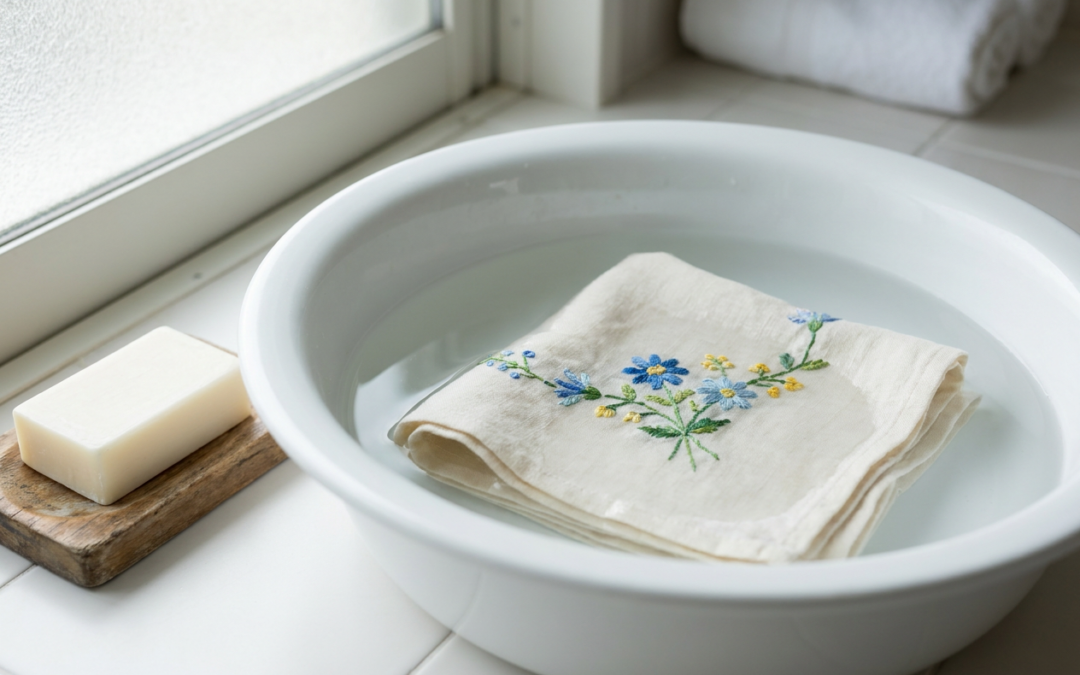
Quick answer: Hand wash embroidered clothes in cold water with a mild detergent. Never bleach or wring them. Hang them to dry in shade, away from direct sun. Iron inside out on low heat so the thread work keeps its shape and relief.
Cold water, a mild detergent and gentle hands keep embroidery flat, bright and firmly anchored to the cloth. Heat, friction and wringing cause the damage, so the whole routine comes down to keeping those three away from the thread work.
Pakistani embroidered suits carry a lot of thread on the base cloth, and that weight makes a wet shirt easy to stretch. A careless wash pulls the threads out of tension, warps the weave and leaves puckering around the neckline. Wash it the right way and the suit drapes the way it did when it came back from your tailor.
What Goes Wrong When You Wash Thread Work
Threads Snag and Lose Tension
Embroidery holds its pattern through even thread tension. Rough handling makes those threads catch, pull or snap.
Hand work done on the adda, the wooden frame karigars (craftsmen) stretch cloth on, often carries raised zardozi (metal-thread embroidery), pearls or beads. Friction rubs those raised details against everything around them. Once one metallic or silk thread breaks, the motif around it loses its anchor and starts to unravel, and a repair on a finished shirt rarely stays invisible.
The Base Fabric Shrinks Around the Embroidery
Warm water shrinks the base cloth, but synthetic and metallic embroidery threads keep their length. The embroidered panel stays the same size while the linen around it pulls in, and that mismatch leaves permanent puckering around the neckline and borders.
Each weave reacts to water in its own way. The khaddar vs linen guide explains how the two winter fabrics behave. Whatever the weave, cold water keeps the front panels lying flat once the suit dries.
Dye Bleeds Between Contrasting Pieces
Dark base dyes travel into lighter thread work when a garment soaks too long. A navy or maroon shirt left in the basin stains white, silver or gold embroidery and wipes out the contrast that makes the design stand out.
A 3-piece suit adds a second risk: its pieces are often dyed or printed differently. A plain dyed trouser, printed sleeves and a lighter embroidered dupatta can each release colour onto the others if they share the water. Hot water opens the fibres and releases even more loose dye, so wash each piece on its own in cold water to keep the colour in the cloth and off the motifs.
How to Hand Wash an Embroidered 3-Piece Suit
-
Prepare and Test the Colour
Turn the shirt and trousers inside out so the front motifs face away from friction. Wash the shirt, trouser and dupatta separately, and give a light chiffon or organza dupatta even less time in the water.
Before you wash, press a damp white cotton cloth against an inside seam of each piece. If no colour comes off, that piece is ready for the basin. If colour transfers, take it to a dry cleaner instead.
-
Wash in Cold Water
Fill a clean, wide basin with cold water. Dissolve a small amount of mild liquid detergent, with no bleach, before the clothes go in.
Submerge the shirt and press the soapy water through the cloth with your palms. Never scrub with a brush or rub embroidered sections together. Keep the soak to five minutes so the dye stays in the weave.
-
Rinse Without Wringing
Drain the basin and refill it with clean cold water. Dip the shirt in and out until no suds remain.
Never twist or wring the fabric. Wringing snaps embroidery threads and stretches wet cloth out of shape. Press the garment flat against the side of the basin to push the water out instead.
Care Steps for Embroidered Winter Linen
The Goudos linen product pages list exact care steps, and they make a good worked example for any embroidered winter suit. The printed embroidered linen suit carries embroidery across the front, printed sleeves and a printed dupatta. The embroidered linen suit with a plain dyed trouser pairs an embroidered shirt and dupatta with printed sleeves.
Here are the steps both pages give, with the reason behind each one.
| Care Step | What to Do | Why It Matters |
|---|---|---|
| Washing | Hand wash only in cold water. | Cold water stops the linen from shrinking and keeps dark dyes out of the thread work. |
| Detergent | Avoid harsh detergents and do not bleach. | Strong chemicals strip colour from printed linen and weaken embroidery threads. |
| Drying Method | Air dry only; do not tumble dry. | A dryer adds heat and constant friction, which flattens the embroidery and shrinks the suit. |
| Drying Location | Dry in shade away from direct sunlight. | Direct sun fades dyes and turns linen fibres brittle over time. |
| Ironing | Iron on low heat with the garment inside out. | Low heat keeps metallic and silk threads from scorching or flattening under the iron. |
Why Machine Washing Damages Embroidery
A washing machine drum throws an embroidered shirt against zips, buttons and rough fabrics in the same load. That friction pulls the embroidery loops out of line, and beads or zari (metallic thread) catch on the drum holes.
The spin cycle then twists the wet garment at speed to throw out the water. That twisting stretches the side seams and warps an embroidered neckline for good. Keep heavily embroidered pieces out of the machine altogether.
How to Dry and Iron Over Embroidery
Lay the wet pieces flat on a clean white towel. Roll the towel up with the clothes inside and press down to soak up the extra water.
Unroll it straight away and hang the damp pieces folded over a drying rack or a wide rail. Skip the clothes hanger: the weight of a wet embroidered shirt drags the shoulder seams down. Dry everything in shade, because direct sun fades dyes and yellows white thread work.
For ironing, turn the shirt inside out and set the iron to low heat. Lay a thin cotton pressing cloth over the back of the embroidery for extra protection.
Press down in one spot, lift, and move to the next. Never drag the iron across the cloth: dragging flattens the raised work, pushes motifs out of shape and stretches the base cloth unevenly.
Spot Cleaning and Storage
A small stain does not need a full wash. Dab it at once with a clean, damp white cloth. Never rub, because rubbing drives dirt into the weave and frays the threads.
For a stubborn mark, add one drop of mild, clear liquid detergent to the damp cloth and press it onto the stain. Dab the spot with fresh cold water until no soap remains.
Cotton silk follows its own rule: the Goudos cotton silk product pages recommend dry cleaning or a gentle hand wash.
Let every piece dry right through before you put it away. Store unstitched suits and finished pieces in breathable cotton garment bags, not sealed plastic. Plastic traps moisture, and moisture tarnishes zari and tilla (gold or silver thread work). Fold embroidered shirts with acid-free tissue paper between the folds so the raised work does not snag the cloth beneath it.
Which Washing Method Fits Your Embroidered Suit
- Embroidered linen: hand wash in cold water, air dry in shade and iron inside out on low heat, exactly as the product pages say.
- Cotton silk: dry clean it or give it a gentle hand wash, as its product pages recommend.
- Heavy zardozi and zari hand work, pearls or beads: spot clean between wears and send it to a dry cleaner you trust for a full clean.
- A piece that bleeds in the colour test: take it to a dry cleaner, even if the rest of the suit passed.
Choosing your next winter suit? Browse the Goudos unstitched suits, use the magnifying lens on the product photos to check the embroidery up close, and read the care steps on each product page before you order.
Frequently Asked Questions (FAQs)
Can I wash embroidered clothes in a washing machine?
Keep heavily embroidered clothes out of the machine. Drum friction and the spin cycle pull threads and distort the pattern. Hand wash them in cold water instead.
How do you hand wash clothes with heavy thread work?
Turn the garment inside out and dip it in cold water with a little mild detergent. Press the water through the cloth for up to five minutes without scrubbing. Rinse in clean cold water and press the water out flat, never wring it.
How do I stop colour bleeding when washing Pakistani suits?
Press a damp white cloth on an inside seam of each piece first. Wash the shirt, trouser and dupatta separately in cold water, keep each soak to five minutes and never leave a wet suit bundled up. Send any piece that bleeds in the test to a dry cleaner.
Can embroidered clothes go in the dryer?
No. Tumble drying adds heat and constant friction, which flattens the embroidery and shrinks the base cloth. The Goudos linen pages say air dry only, in shade.
Does hot water ruin zari or silk thread embroidery?
Yes. Hot water shrinks the base cloth while metallic zari keeps its length, so the design puckers around the motif. It also opens the fibres and lets dark base dyes run into lighter zari or silk thread work.
How do you iron over embroidery?
Turn the shirt inside out and set the iron to low heat. Lay a thin cotton cloth over the back of the embroidery. Press down, lift and move on, instead of dragging the iron across the cloth.